
OcoochMountains.com
Preview Access
Preview Access
THE DRIFTLESS AREA · WISCONSIN
PAH-ko-chee ah-hay-MAH-shee
Mountains of Snowy Lodges — A Sacred Place
Vernon · Richland · Monroe · Juneau · Sauk · Crawford · La Crosse
The largest collection in the world — Thunderbird, Bear, Water Panther
Ancient shoreline stones — biofilm petrified into natural art
Hunter-gatherer peoples hunted, fished, traded, and celebrated here
The Effigy Moundbuilders are presumed to be egalitarian. There were no signs of burials, grave goods, status, or tribal tradition, implying that everyone could enjoy them, making them a true archetype for Oneness with Nature!
Predominant shapes are the thunderbird, bear, and water panther, representing the natural realms of Sky, Night, Earth, Forest, Water, and Underground.
Wear the Myth. Keep the Stone.
Ready to Wear the Myth? Keep the Stone? → Visit the ShopEIGHT DEFINITIVE PAGES · ONE COMPLETE ARCHITECTURE
THE DRIFTLESS AREA
The Ocooch Mountains are part of the Paleozoic Plateau known as the Driftless Area, bordered by the Central Plains of Wisconsin to the north, the Baraboo Hills to the east, the Wisconsin River to the south, and the Mississippi River to the west.

— Ocooch Mountains, Eric Jonathan Zingler
These are not mountains in the conventional sense. They are the deeply dissected remnants of an ancient plateau.
What makes the Ocooch Mountains extraordinary is that they were never glaciated. The ancient shoreline was preserved — and with it, the Ocooch Mountain Rocks — early-lifeform biofilm mixed with sand — petrified by water into natural art.
Between approximately 700 and 1200 CE, hunter-gatherer peoples constructed approximately 20,000 effigy mounds across these ridges. The largest collection in the world. The principal effigies are the Thunderbird, representing the Sky/Night Realm; the Bear, representing the Earth/Forest Realm; and the Water Panther, representing the Water/Underground Realm. It is believed that these mounds were built to celebrate the annual renewal of life. They made the Ocooch Mountains a sacred place.
The Ocooch Mountains and the six realms are an archetype of Oneness with Nature, which our mission promotes, leading to a deeper relationship with the Creator, interior growth, responsible ecology, and more loving relationships.
Wear the Myth. Keep the Stone.
Visit the Shop →A real Indigenous word — recovered through real research — restored to the landscape.
"I would suggest the meaning 'Snowy Lodges' or 'Snow-covered Lodges.' One would say The Mountains of the Snowy Lodges directly in Ioway as Pahkochee Ahaymahshee. Pronounced as PAH-ko-chee ah-hay-MAH-shee."
— Lance Michael Foster, MA, Tribal Historic Preservation Officer, Iowa Tribe of Kansas and Nebraska
Lance Michael Foster identified Ocooch as Báxoje / Páxoje — the self-referential name of the Ioway people. The Ioway lived in the Ocooch Mountains by the Mississippi floodplains near La Crosse, Wisconsin.
[ Photo: Foster's Painting — Hills and Snowy Lodges with smoke from the fire hole and tribal members in buffalo robes ]
Francis Perry and Edith Thundercloud (1977) identified the Ho-Chunk word Hoguć — pronounced ho-gooch — meaning "Where they go to shoot fish." William Quackenbush, Tribal Preservation Officer, verified: ho = fish, guuc = shoot. The Ho-Chunk fished the Wisconsin River and its tributaries in the Ocooch Mountains.
"I'm assuming that your use of the letter C in Ocooch has the value of K. Then I'd guess your analysis is probably about the best hypothesis possible."
— Robert Rankin, PhD, Siouan Linguistic Authority — to Lance Michael Foster
Linguist Brian McHugh hypothesized that Ocooch may have an ancient root word from Old Hoočąk, Okhúuč, pronounced "oh-COOCH."
— Brian McHugh, PhD, Temple University Linguist — to Eric Jonathan Zingler
Ocooch is not a made-up word. It is not a corruption. It is a real Indigenous word — restored to the landscape
Want to go deeper? The complete etymology research is in the books.
Get the Books →Native American Legacy
For more than 14,500 years, when people hunted mammoths in Wisconsin, many Indigenous peoples have hunted, fished, traded, and celebrated in the Ocooch Mountains. After the Moundbuilders, the Menominee, an ancient tribe, witnessed a Great Nation arise in northeast Wisconsin and then disperse. After first contact with Europeans, the Potawatomi, Sac and Fox, and Kickapoo peoples arrived, and the Potawatomi remained in eastern Wisconsin.
Lance Michael Foster, MA, Iowa Historic Preservation Officer, Iowa Tribe of Kansas and Nebraska, said that the clans came together to form the Honga — the "Great Nation" — at MaShuje, "Red Earth," in the Green Bay area. From this convergence, the clans dispersed across the Upper Midwest — each carrying the memory of the land they had shaped.
The Ioway — Báxoje / Páxoje — were biological descendants of the Moundbuilders. They lived in the Ocooch Mountains by La Crosse, farming the floodplains and hunting buffalo on the plains to the west when they were part of the Oneota tradition. A sister tribe of the Ho-Chunk, the Ioway called the Ho-Chunk "Grandfathers." Their 1837 treaty map documents intimate geographic knowledge of the Ocooch Mountains. Lance Michael Foster, MA, Tribal Historic Preservation Officer, Iowa Tribe of Kansas and Nebraska, is their voice in this research.
Biological descendants of the Moundbuilders. Former homeland at Red Banks (Green Bay), where they cultivated the three sisters — corn, beans, and squash — in the floodplains. Presently located at Black River Falls, Wisconsin. Their word Hoguć — "Where they go to shoot fish" — reflects their deep relationship with the Wisconsin River and its tributaries. They serve as indigenous cultural preservation advisors for the Kickapoo Valley Reserve, a major river in the Ocooch Mountains.
Ancient Great Lakes nation and wild rice cultivators. Witnesses to the effigy mound tradition across the Upper Midwest. Their presence in the region predates written history.
A nation of the Great Lakes with deep relationships throughout the Upper Midwest through trade networks and shared ecological knowledge of the Ocooch Mountains region.
The Sac and Fox maintained trade relationships throughout the Driftless Area. Their knowledge of the river systems and ridgelines of the Ocooch Mountains contributed to the region's complex Indigenous geography. The Fox River bears witness to their presence.
The Kickapoo River — the most crooked river in North America — runs through the heart of the Ocooch Mountains and carries their name. As they passed through the area, the Kickapoo people's relationship with this landscape is written in the river itself: "one who moves about, standing now here, now there."
We honor their enduring relationship with this land.
Five maps — from ancient shoreline to Indigenous territory to 19th-century exploration.
480 million years ago, a warm shallow sea covered what is now Wisconsin. The Ocooch Mountains are the surviving remnant of that sea's shoreline — preserved by the Driftless Area's escape from glaciation. The ancient biofilm that formed in that sea became the Ocooch Mountain Rocks.

Between 700 and 1200 CE, approximately 20,000 effigy mounds were constructed across the Ocooch Mountains — the largest collection in the world, although only a few thousand remain today. The mounds follow the ridge lines, with water panther effigies near springs and rivers.
The Ioway (Báxoje / Páxoje) signed a treaty in 1837 that included a detailed map of their territorial knowledge — confirming their intimate geographic relationship with the Ocooch Mountains. Eric Jonathan Zingler identified this map as evidence that Major Long learned from private conversations with an Ioway chief that they once lived in the region he would later name the Ocooch Mountains.

Major Stephen H. Long's 1822 expedition map is the earliest map to feature the Ocooch Mountain region, recording the river systems and ridgelines. Mapmakers in Europe and America incorporated his work into their maps until 1849, when rails, roads, and cities displaced geographical features.
The Ocooch Mountains are bounded by the Central Plains of Wisconsin to the north, the Baraboo Hills to the east, the Wisconsin River to the south, and the Mississippi River to the west. The counties of Vernon, Richland, Monroe, Juneau, Sauk, Crawford, and La Crosse lie within this boundary.
The research behind OcoochMountains.com — in video and in print.

Eric Jonathan Zingler
The complete authoritative source — history, geology, Indigenous peoples, etymology, and the sacred story of the Driftless Area.
Buy on Amazon →
Eric Jonathan Zingler
The geological and mythic story of the ancient shoreline stones — their formation, their realm alignment, and their Creator's witness.
Buy on Amazon →Ancient shoreline biofilm — petrified by water — shaped into natural art by 480 million years.
A captured real-time event
The stone images in this section are unique photographic art by Eric Jonathan Zingler. No photo can be reproduced. Stones may reveal shapes, eyes, faces, or unusual features, depending on the angle, light, and weather. Since the stones were born in water, rain reveals colors that power washing can enhance, although lichens and moss may also be part of the reveal. Crevices and dark places can surprise. Magnification often produces startling results. Reveals cannot be anticipated, and images are captured with any available camera or cell phone.
The reveal is like seeing the Man in the Moon or a face on Mars; however, these photos are more than that: they are the stone’s own geology — shaped by water, mineral flow, crystalline formation, and the patient artistry of deep-earth forces 480 million years ago, surfacing in forms that carry weight, meaning, and the unmistakable quality of Presence — of the Creator watching.
The images show stromatolites altered by diagenesis, in which cyanobacteria biofilm mixed with sand is replaced by minerals. Stromatolites are stony structures created when cyanobacteria rebuild their biofilm after windblown sand covers their colony. Repeated cycles create mushroom-like structures near the shoreline. Cyanobacteria are among Earth’s earliest lifeforms, and scientists search for them on Mars. They are photosynthetic and created the Great Oxygen Event—the basis for the air we breathe.
The tops of the Ocooch Mountains’ bluffs and ridges are remnants of an Ordovician seashore, rich in stromatolites, exposed by uplift and erosion that created caves where stromatolite stone mineralized. Many collapsed, and some remain hidden. All were miraculously preserved from the glaciers’ grinding ice. Ocooch Mountain rocks are unique in the world, with unparalleled beauty, surprising an Amish farmer as he plows.
— Eric Jonathan Zingler
Reading the Etsy collection…
Reading the Etsy collection…
Bear‑like • Strong profiles • Dense mineralization • Earthy
The Bear effigy in stone — dense, powerful, watchful, protective, storytelling.
Myth‑bearers • Eyes that speak
The Thunderbird effigy in stone — expansive, visionary, sky‑aligned.
Ancient shoreline memory • Serpentine
The Water Panther effigy in stone — fluid, ancient, transformative.
Each stone belongs to one of the six Ocooch realms — Sky/Wind, Earth/Stone, Water/River, Forest/Root, Night/Shadow, Underworld/Fire — confirmed by physical stones in the collection.
Formed in Ordovician cave rubble, revealing vivid coloration beneath a hard patina. A 480‑million‑year‑old witness to the Driftless story.
Some stones appear to have fallen into place to tell a myth — eyes, faces, creatures, and stories emerging from deep within the earth.
Wear the Myth. Keep the Stone.
Visit the Shop →THE SACRED JOURNEY
Enter a realm. Receive the blessing. The pathway is ancient.
The pathway is complete when you carry it forward. The Ocooch Mountains walk with you now.
Wear the Myth. Keep the Stone.
Visit the Shop →The Canticle of the Sun
Saint Francis of Assisi — Franciscan Spirituality woven through the Ocooch Mountain Realms
Brother Sun • Sky Realm
The Creator shines through all things. Illumination is not about certainty — it is about seeing the world as gift.
“May the light within you grow warm and clear.”
Sister Moon & the Stars • Night Realm
Even in darkness, the Creator guides. Mystery is not absence — it is presence in another form.
“May you trust the guidance that comes softly.”
Brother Wind • Sky Realm
The Spirit moves where it wills. Freedom is not escape — it is openness to grace.
“May the breath of creation move through you.”
Sister Water • Water Realm
Water cleanses, refreshes, and sustains. Renewal is not starting over — it is returning to what is true.
“May your heart be washed in quiet renewal.”
Brother Fire • Underground Realm
Fire brings warmth, clarity, and purification. Transformation is not destruction — it is refinement.
“May your inner fire burn steady and bright.”
Sister Mother Earth • Earth/Forest Realm
The Earth sustains us with love and abundance. Kinship with creation leads to kinship with people.
“May you walk gently upon the earth.”
Those Who Forgive and Love • All Realms
Forgiveness is the highest form of love. Forgiveness is not forgetting — it is releasing the weight that keeps us from love.
“May peace rise in you like a quiet dawn.”
A thousand years of spring renewal — carried forward into the Pilgrim's Pathway.
It is believed that the Moundbuilders, who were hunter-gatherers, would journey each spring from the deep valleys of the Ocooch Mountains to celebrate the annual renewal of life by constructing effigy mounds on the high ridges and bluffs or by springs and rivers. Archaeologist Robert Birmingham believes it would take approximately fifty people one week to build an effigy mound.
"Birds fly gracefully across ridge tops and up and down slopes. Animals parade across ridge tops and slopes, changing directions, sometimes subtly, with the orientation of the terrain. Water spirits move up and down elevations, crawling to and from springs and other water sources...The effigy builders seem to have taken their mound fill from shallow scrapes or in ways that would heal quickly, leaving no scars behind."
— Robert Birmingham and Amy Rosebrough, Indian Mounds of Wisconsin
Mound building was a time to renew relationships, enjoy feasts, find spouses, comfort the bereaved, and perform ceremonies that eased grief and inspired people to begin the new year once more. Hunter-gatherer unity with nature and sense of the divine persisted through the centuries. A belief in the Great Spirit took root in their biological descendants, the Ioway. Martha Royce Blaine said the Ioway believed the Great Spirit created all things.
— Historian Martha Royce Blaine, The Ioway Indians
Lance Michael Foster wrote that the word Wakánda, is associated with the Great Spirit. In the past, it appears undefinable, possibly personal or a force:
“The following etymology is suggested for wakánda: wa [something, someone]+kan [old, strange, wonderful, incomprehensible, unquestionable, sacred, supernatural]+da [there, somewhere].”
Foster wrote that creation was not a one-time event for the Ioway. It was ongoing. Sacred stories called Wekan. enabled the Ioway to understand their relationship to the natural world. A reflection of Wakánda pervaded all things.
— Lance Michael Foster, MA, Tribal Historic Cultural Preservation Officer, Iowa Tribe of Kansas and Nebraska, Sacred Bundles of the Ioway Indians
OcoochMountains.com honors these traditions by promoting Oneness with Nature, a closer relationship with the Creator, responsible ecology, interior growth, and more loving relationships through seasonal rituals and blessings in the Pilgrim’s Pathway’s six realms: Sky, Night, Earth, Forest, Water, and Underground. Two seasonal blessing cycles are offered: The Path of Seeing (outward reflection) and the Path of Becoming (inward reflection) to help us understand our connection to the natural world. St. Francis’s Canticle of the Sun: "Brother Sun, Sister Moon" provides inspiration. Visit the realms—receive your blessings!
Wear the myth, Keep the Stone
Walk the six realms and receive the seasonal blessings of the Path of Seeing and the Path of Becoming.
Enter the Pilgrim Pathway →
The ecological vision at the heart of the Ocooch Mountains mission.
The Driftless Area is one of the most ecologically precious landscapes in North America. Unglaciated for 480 million years, it harbors species and geological formations found nowhere else. The Ocooch Mountains are an archetype for Oneness with Nature, inviting you to see nature as Eden Earth.
Eden Earth is the ecological arm of the Ocooch Mountains mission. We believe that responsible ecology is not a political position — it is a spiritual practice. To tend the land is to tend the relationship between the human soul and the living world.
The Effigy Moundbuilders left no signs of hierarchy. They built mounds to celebrate the renewal of life. If we are to honor their legacy, we must treat all land as they did — as a sacred trust, not a commodity. Restore native prairie. Plant milkweed. Protect the springs. Clean the streams. The land remembers what we do to it.
Oneness with Nature. Creator Encounter. Interior Growth. Responsible Ecology. Loving Relationships. Five movements. One arc. A lifetime of spiraling through — returning always to the land that holds us.
Wear the Myth. Keep the Stone.
Visit the Shop →The authoritative sources for the Ocooch Mountains story
No books match that search.
Eric Jonathan Zingler
The complete authoritative source — history, geology, Indigenous peoples, etymology, and the sacred story of the Driftless Area.
Buy on Amazon →
Eric Jonathan Zingler
Ancient Cave Stone — the geological and mythic story of the ancient shoreline stones, their formation, realm alignment, and the Creator's witness.
Buy on Amazon →Eric Jonathan Zingler — historian, artist, and storyteller.
I loved writing and conversing with Native American cultural advisors, linguists, archaeologists, and international map dealers to determine if Ocooch was a real Native American word and whether the Ocooch Mountains were a real place. I discovered that Ocooch was both a sacred place and a people. My book, the Ocooch Mountains, presents a journey of discovery, offering over 80 cartographic and thematic maps and citing 100 historical books — available in the bookstore section. OcoochMountains.com offers inspiration to grow toward Oneness with Nature that the Ocooch Mountains represent.
The Ocooch Mountains are a unique area of unglaciated hills, a piece of ancient shoreline 480 million years old, with a rich treasure trove of ancient life biofilm mixed with sand that cave water petrified, leaving eyes, faces, and strange shapes—a story told in stone that cannot be reproduced. My book, The Ocooch Mountain Rocks, tell their story. Each image in the gallery is carefully prepared as a one-of-a-kind natural work of art—the Creator’s witnesses.
Mound builders in the Ocooch Mountains constructed approximately 20,000 effigy mounds. There were no burials, and it is believed they built the mounds to celebrate the annual renewal of life. Principal shapes are the thunderbird, bear, and water panther. They made the Ocooch Mountains a sacred place, an archetype of Oneness with Nature, beautifully conveyed in words by St. Francis of Assisi’s Canticle of the Sun, Brother Sun and Sister Moon. Franciscan spirituality walks among the thunderbirds, bears, and water panthers in OcoochMountains.com.
I have been ecologically minded since reading Rachel Carson’s Silent Spring as a youth. OcoochMountains.com encourages ecological stewardship. My daughter’s backyard milkweed garden in the middle of a large city has become a Monarch Waystation! Together, the OcoochMountains.com family can make an impact everywhere, as expressed in the Eden Earth and Wiki sections. Wear the Myth, Keep the Stone—make an ecological difference! May you grow closer to the Creator and interiorly like St. Francis!
Selected sources consulted in the research and writing of The Ocooch Mountains.
 Alex, Lynn. Iowa's Archaeology Past. Iowa City: University of Iowa Press, 2010.
 Andreas, Alfred Theodore. The History of Chicago 1. New York: Arno Press, 1884; 1975 rpt.
 Barr, Daniel P. Unconquered: The Iroquois League at War in Colonial America. Westport CT: Praeger, 2006.
 Birmingham, Robert and Amy Rosebrough. Indian Mounds of Wisconsin. 2nd ed. Madison: University of Wisconsin Press, 2017.
 Blaine, Martha Royce. The Ioway Indians. Norman: University of Oklahoma Press, 1979.
 Black Hawk. Autobiography of MA-KA-TAI-ME-SHE-KIA-KIAK, or BLACK HAWK. Rock Island: American Publishing Co., 1912.
 Blair, Emma Helen. The Indian Tribes of the Upper Mississippi Valley and Region of the Great Lakes 1 & 2. Cleveland, OH: A. Clark Co., 1911.
 Bonner, Thomas D. The Life and Adventures of James P. Beckwourth. New York, 1856.
 Brandon, William. The American Heritage Book of Indians. NY: American Heritage Publishing, 1961.
 Cassidy, Frederic G. "Dane County Place-Names." Madison: University of Wisconsin Press, 1930.
 Catlin, George. Life among the Indians. London: Gall and Inglis, 187?
 Catlin, George. Notes of eight years' travels in Europe with his North American Indian collection 2. New-York: Burgess, Stringer & Co., 1848.
 Catton, Bruce. Michigan: A Bicentennial History. New York: W. W. Norton & Company, 1976, 1984.
 Champlain, Samuel de. The Works of Samuel de Champlain. H. P. Bigger, Ed. 2. Toronto: The Champlain Society, 1922.
 Champlain, Samuel de. Voyages of Samuel de Champlain. Memoir I. Boston: The Prince Society, 1878.
 Charlevoix, Pierre Francois Xavier de. Journey of a Voyage to North America. Chicago: The Paxton Club, 1923.
 Christianson, Theodore. The History of Minnesota 1. Chicago: American Historical Society, 1935.
 Cosby, Cindy. The Tallgrass Prairie: An Introduction. Chicago: Northwestern University, 2017.
 Costa, David J. "Culture-Hero and Trickster Stories." In Brian Swann, ed., Algonquian Spirit. Lincoln: University of Nebraska Press, 2005.
 Dechene, Louise. Habitants and Merchants in seventeenth-century Montreal. Quebec: McGill-Queen's University Press, 1992.
 Dorsey, James Owen. "Siouan Sociology." Fifteenth Annual Report of the Bureau of Ethnology. Washington: Government Printing Office, 1897.
 Dott, Robert H. Jr., and John W. Attig. Roadside Geology of Wisconsin. Missoula: Mountain Press Publishing, 2004.
 Douglas, George M. Lands Forlorn. New York: G. P. Putnam's Sons, 1914.
 Evans, Howard Ensign. The Natural History of the Long Expedition (1819-1820). New York: Oxford Univ. Press, 1997.
 Fagan, Brian M. Ancient North America. London: Thames and Hudson, 2005.
 Foster, Lance M. The Indians of Iowa. Iowa City: University of Iowa Press, 2009.
 Frazier, Ian. Great Plains. New York: Picador, 1989.
 Gelb, Norman. Jonathan Carver's travels through America, 1766-1768. NY: Wiley, 1993.
 Gradwohl, David Meyer et al., eds. The Worlds Between Two Rivers: Perspectives on American Indians in Iowa. Iowa City: University of Iowa Press, 2000.
 Hall, John. Uncommon Defense. Cambridge: Harvard University Press, 2009.
 Hall, Robert. Archaeology of the Soul: North American Indian Belief and Ritual. Champaign: University of Illinois Press, 1997.
 Hamalainen, Pekka. The Comanche Empire. New Haven: Yale University Press, 2008.
 Hine, Robert V., and John Mack Faragher. The American West: A New Interpretive History. New Haven: Yale University Press, 2000.
 Holmes, Gail George. The Chiefs of Council Bluff. Charleston: The History Press, 2012.
 Innis, Harold Adams. The Fur Trade in Canada. Toronto: University of Toronto Press, 1999.
 Isenberg, Andrew C. The Destruction of the Bison. Cambridge: Cambridge University Press, 2001.
 James, Edwin. An Account of an Expedition from Pittsburgh to the Rocky Mountains. Philadelphia: H. C. Cary and I. Lea, 1823.
 Jung, Patrick J. The Black Hawk War of 1832. Norman: University of Oklahoma Press, 2007.
 Jung, Patrick J. The Misunderstood Mission of Jean Nicolet. Madison: Wisconsin Historical Society Press, 2018.
 Keating, William Hypolitus. Narrative of an Expedition to the Source of St. Peter's River. Philadelphia: H.C. Cary & I. Lea, 1824.
 Kellogg, Louise Phelps. Early Narratives of the Northwest, 1634-1699. New York: Charles Scribner's Sons, 1917.
 Kruz, Rudolf Friedrich. An Account of His Experiences Among Fur Traders and American Indians. Lincoln: University of Nebraska Press, 1970.
 Le Clercq, Father Christian. First Establishment of the Faith in New France. New York: John G. Shea, 1881.
 Lepore, Jill. The Name of War: King Philip's War and the Origins of American Identity. New York: Vintage, 1998.
 Long, Stephen. Voyage in a six-oared skiff to the Falls of St. Anthony in 1817. Philadelphia: Henry B. Ashmead, 1860.
 Lounsberry, Alice. Sir William Phips: Treasure fisherman and governor of the Massachusetts bay colony. NY: C. Scribner's sons, 1941.
 Martin, Lawrence. Physical Geography of Wisconsin. Madison: University of Wisconsin Press, 1965.
 Martin, Susan. Wonderful Power: The Story of Ancient Copper Working, Lake Superior Basin. Detroit: Wayne State University Press, 1999.
 Mayer, Frank H. The Buffalo Harvest. Denver: Sage Books, 1958.
 McAdams, William. Records of Ancient Races in the Mississippi Valley. St. Louis: C. R. Barns Publishing, 1887.
 McKenney, Thomas, James Hall et al. History of the Indian tribes of North America. Philadelphia: D. Rice & Co., 1872.
 Miner, William Harvey. The Iowa. Cedar Rapids: The Torch Press, 1911.
 Nevins, Allan. Fremont, the West's Greatest Adventurer. New York: Harper & Brothers, 1928.
 Newton, Stan. The story of Sault Ste. Marie and Chippewa County. Sault Ste. Marie: Sault News Print Co., 1923.
 Norlie, Olaf Morgan. History of the Norwegian People in America. Minneapolis: Augsburg Publishing House, 1925.
 Nute, Grace Lee. Caesars of the Wilderness. St. Paul: Minnesota State Historical Society, 1978.
 Nute, Grace Lee. The Voyageur. St. Paul: Minnesota Historical Society, 1955.
 Parkman, Francis. "Count Frontenac and New France." In France and England in North America. Boston: Little, Brown, & Company, 1877.
 Power, Susan. Early Art of the Southeastern Indians. Athens: University of Georgia Press, 2004.
 Pritzker, Barry M. A Native American Encyclopedia. New York: Oxford University Press, 2000.
 Radin, Paul. Smithsonian Bureau of American Ethnology, 37. Washington: Government Printing Office, 1923.
 Radin, Paul. The Winnebago Tribe. Lincoln: University of Nebraska Press, 1990.
 Richter, Daniel K. Before the Revolution: America's Ancient Pasts. Cambridge: Harvard University Press, 2011.
 Sawyer, Alvah Littlefield. A History of the Northern Peninsula of Michigan. Lewis Publishing Company, 1911.
 Schoolcraft, Jane Johnston. The Sound the Stars Make Rushing Through the Air. Philadelphia: University of Pennsylvania Press, 2000.
 Schoolcraft, H. R. Historical and statistical information respecting the Indian tribes of the United States. Philadelphia: Lippincott, Grambo & Company, 1851.
 Schultz, Gwen. Wisconsin's Foundations. 2nd ed. Madison: University of Wisconsin Press, 2004.
 Seeman, Erik. The Huron-Wendat Feast of the Dead. Baltimore: Johns Hopkins University Press, 2011.
 Skinner, Alanson. Societies of the Iowa, Kansa, and Ponca Indians. New York: American Museum of Natural History, 1915.
 Stephens, Hiram B. Jacques Cartier and his four voyages to Canada. Montreal: Drysdale & Co., 1890.
 Sutherland, Patricia. "The Norse and Native North Americans." In Vikings: The North Atlantic Saga. Washington: Smithsonian Institution, 2000.
 Taylor, Alan. The American Colonies. New York: Penguin Books, 2002.
 Thompson, David. David Thompson's Narrative of His Explorations, 1784-1812. Toronto: Champlain Society, 1916.
 Thwaites, Reuben Gold, ed. The Jesuit Relations and Allied Documents. 73 Volumes. Cleveland: Burrows Brothers, 1898.
 Trigger, Bruce G. "The Disappearance of the St. Lawrence Iroquoians." In The Children of Aataenstic. Montreal: McGill-Queen's University Press, 1976.
 Viola, Herman J. It Is A Good Day to Die: Indian Eyewitnesses Tell the Story of the Battle of the Little Bighorn. Lincoln: Bison Books, 2001.
 Wallace, Paul W. Indians in Pennsylvania. Darby PA: Diane Publishing Inc., 2007.
 Wheeler, Homer. Forty Years in the Old West. Indianapolis: The Bobbs-Merrill Company, 1925.
 Whitney, Ellen M., ed. The Black Hawk War of 1831-1832. Springfield: Illinois State Historical Library, 1970.
Franciscan spirituality walks through the Ocooch Mountains — these are the lives and writings that carry the Canticle of the Creatures forward.
 My God and My All: The Life of Saint Francis of Assisi — Elizabeth GoudgeA beautifully written, contemplative biography with a gentle, poetic tone.
 St. Francis of Assisi: A Biography — Omer EnglebertA classic, deeply respected biography used by scholars and spiritual directors.
 Francis of Assisi: A New Biography — Augustine ThompsonA modern, historically rigorous biography with spiritual depth.
 The Life of St. Francis of Assisi — BonaventureA foundational spiritual classic written by a medieval theologian.
 Francis of Assisi: The Life and Afterlife of a Medieval Saint — André VauchezA scholarly but accessible exploration of Francis’s historical impact.
 The Little Flowers of St. Francis — Brother UgolinoA beloved collection of stories illustrating Francis’s humility, joy, and love of creation.
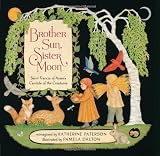 Brother Sun, Sister Moon: Saint Francis of Assisi’s Canticle of the Creatures — Katherine PatersonA poetic, illustrated retelling of the Canticle — perfect for reflection.
 St. Francis of Assisi — G.K. ChestertonA lively, literary portrait of Francis by one of the great Christian writers.
 Surrounded by Love: Seven Teachings from Saint Francis — Murray BodoA short, contemplative guide ideal for spiritual practice.
 Song of St. Francis — Tomie dePaolaAn illustrated telling of the saint’s life for readers of every age.
Wear the Myth. Keep the Stone.
Visit the Shop →Pilgrim stories of ecological stewardship — from people practicing Oneness with Nature, one act at a time.
This Wiki belongs to the pilgrims. Every entry is a real story of ecological stewardship — a person, a place, an act of care for the living world. Add your story. Search for inspiration. Discover that you belong to a growing community of people making a difference, one milkweed plant, one stream cleanup, one bee sanctuary at a time.
Who knows what we could do with a thousand entries?
Every act of care is an effigy mound — built for everyone, belonging to no one, lasting longer than the builder.
Wear the Myth. Keep the Stone.
Visit the Shop →Wear the Myth. Keep the Stone.
Buying clothing featuring an effigy shape, a thunderbird, a bear, or a water panther is a statement that you believe we need to experience Oneness with Nature like the Moundbuilders over a thousand years ago, develop a closer relationship with the Creator like St. Francis, practice responsible ecology, grow interiorly, and enjoy more loving relationships—Wear the Myth, Keep the Stone
Apparel, vessels, keepsakes, and future offerings are grouped according to their Etsy item tags. Every card carries its realm color and opens into the full story without losing the path back to the gallery.
Reading the Etsy shop…
Reading the Etsy shop…
Each effigy symbol — Thunderbird, Bear, Water Panther — available on apparel and gear.
Sky/Night Realm
T-shirts, hoodies, hats — gold on dark
Earth/Forest Realm
T-shirts, hats, totes — forest green
Water/Underworld Realm
T-shirts, mugs — stream blue
All Realms
The actual Ocooch Mountain Rocks — Protection, Vision, Flow stones
A portion of all proceeds goes directly to habitat restoration and Indigenous cultural preservation in the Ocooch Mountains region.